Veggie Pizza Recipe – Easy, Delicious, and Loaded with Fresh Vegetables
A vibrant and flavorful veggie pizza can bring warmth and joy to your dining table. When crisp vegetables, rich tomato sauce, bubbling cheese, and a golden crust come together, you end up with a dish that is both comforting and nutritious. As someone who has experimented in kitchens and tested countless recipes, I find that a well made vegetable pizza can rival any gourmet offering. You will discover how simple swaps and thoughtful layering bring out the best in fresh produce. This article will walk you through every step, from gathering ingredients to serving a result that delights both the eyes and the palate. You will also learn customization ideas and nutritional insight so you can make it your own. Let’s dive into the world of veggie pizza.
Ingredients Needed
Below is a table listing the ingredients and their approximate calorie count per given quantity. Keep in mind that actual values may vary slightly based on brand or size.
| Ingredient | Quantity | Approximate Calories |
|---|---|---|
| Pizza dough (homemade or store bought) | 1 ball (~300 g) | 780 |
| Tomato pizza sauce | ½ cup (125 g) | 70 |
| Mozzarella cheese, shredded | 1 cup (113 g) | 320 |
| Bell pepper (mixed colors), sliced | 1 medium (≈ 150 g) | 45 |
| Red onion, thinly sliced | ½ medium (≈ 75 g) | 30 |
| Zucchini, sliced | 1 small (≈ 100 g) | 20 |
| Mushrooms, sliced | 100 g | 25 |
| Cherry tomatoes, halved | 1 cup (≈ 150 g) | 30 |
| Black olives, sliced | ¼ cup (≈ 35 g) | 50 |
| Fresh spinach leaves | 1 cup (≈ 30 g) | 7 |
| Olive oil | 1 tablespoon (15 ml) | 120 |
| Dried oregano | 1 teaspoon | 5 |
| Salt | to taste | 0 (negligible) |
| Black pepper | to taste | 2 |
Estimated total calories (for entire pizza): ~ 1,504 calories
If you slice that into 8 equal pieces, each slice will be around 188 calories (before any extra dipping oils or side salads).
Step by Step Cooking Instructions
- Preheat the oven and prepare the dough
Begin by preheating your oven to 475 °F (about 245 °C). If you have a pizza stone, place it inside while the oven heats. If not, you can use a baking sheet turned upside down. Meanwhile, let your dough rest on a lightly floured surface so it relaxes and becomes easier to stretch. - Stretch or roll the crust
Using your hands or a rolling pin, gently stretch the dough into a 12 inch round (or rectangle if you prefer). Try to maintain even thickness. If the dough resists, let it rest an extra few minutes to relax the gluten. - Par bake the crust (optional but helpful)
For a crisp bottom, bake the stretched dough for 5 minutes before adding toppings. This helps avoid a soggy center. After that partial bake, remove it and let it cool slightly before adding sauce.To try another comforting dish, see Sourdough Pizza Crust - Spread the sauce and add cheese
Spoon the tomato sauce over the crust, leaving a small border for the crust edge. Use the back of a spoon to gently spread it. Sprinkle the shredded mozzarella evenly over the sauce layer. You can leave small gaps so that vegetables touch the sauce directly, helping them adhere. - Layer the vegetables
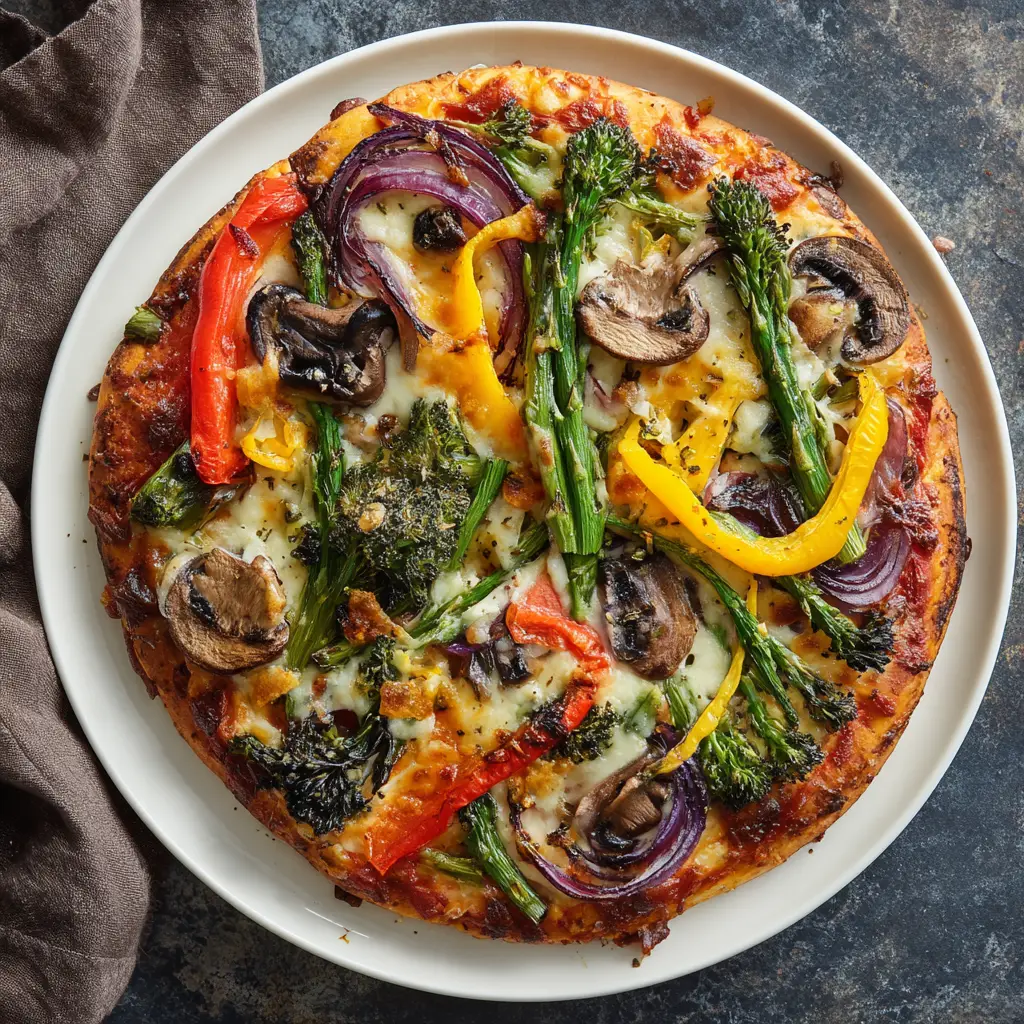
Start with spinach or lighter greens, then arrange bell pepper strips, red onion rings, zucchini slices, mushrooms, cherry tomato halves, and black olives. Try to place them evenly so each bite has a variety. Drizzle the olive oil across the top and sprinkle dried oregano, salt, and pepper. - Bake until golden and bubbly
Slide the assembled pizza onto the hot stone or baking sheet. Bake for 10 to 15 minutes until the cheese is melted and bubbling and the crust edge is golden brown. Keep an eye as ovens vary; the bottom should be crisp without burning. - Rest and slice
Once taken from the oven, allow the pizza to rest for 3 to 5 minutes. This helps ingredients settle and makes slicing easier. Use a sharp pizza cutter or chef’s knife and cut into desired pieces. Serve while still warm.

Tips for Customizing the Recipe
- Swap cheeses or blend
Use part mozzarella and part provolone, fontina, or even a bit of goat cheese to introduce creaminess and tang. Just be cautious about moisture content. - Add a sauce twist
Instead of plain tomato sauce, you might try pesto, olive tapenade, or a white garlic sauce as a base. These change the tone of flavors dramatically. - Roast vegetables first
Offering vegetables a quick roast (such as bell peppers, zucchini, mushrooms) before placing on pizza helps reduce excess moisture and deepens flavor. - Use seasonal vegetables
Swap in asparagus, eggplant, artichoke hearts, roasted squash, broccoli florets, or even thin ribbons of carrot depending on what’s fresh and local. - Include protein
If you want more substance, layer on chickpeas, tofu cubes, or even plant based sausage slices. These boost satiety. - Drizzle after baking
Finish with a light swirl of extra virgin olive oil, balsamic glaze, chili oil, or even fresh basil chiffonade for lift. - Experiment with herbs
Fresh basil, thyme, rosemary, or even arugula added after baking give bursts of herbal aroma. - Make gluten free or whole wheat
Use a gluten free pizza crust or a whole wheat dough. Be mindful that texture will differ but flavor can remain strong.
Nutritional Information
Here is a closer look at the nutritional breakdown for one serving (one slice of eight). Values are approximate and may vary depending on exact brands and thickness of crust.
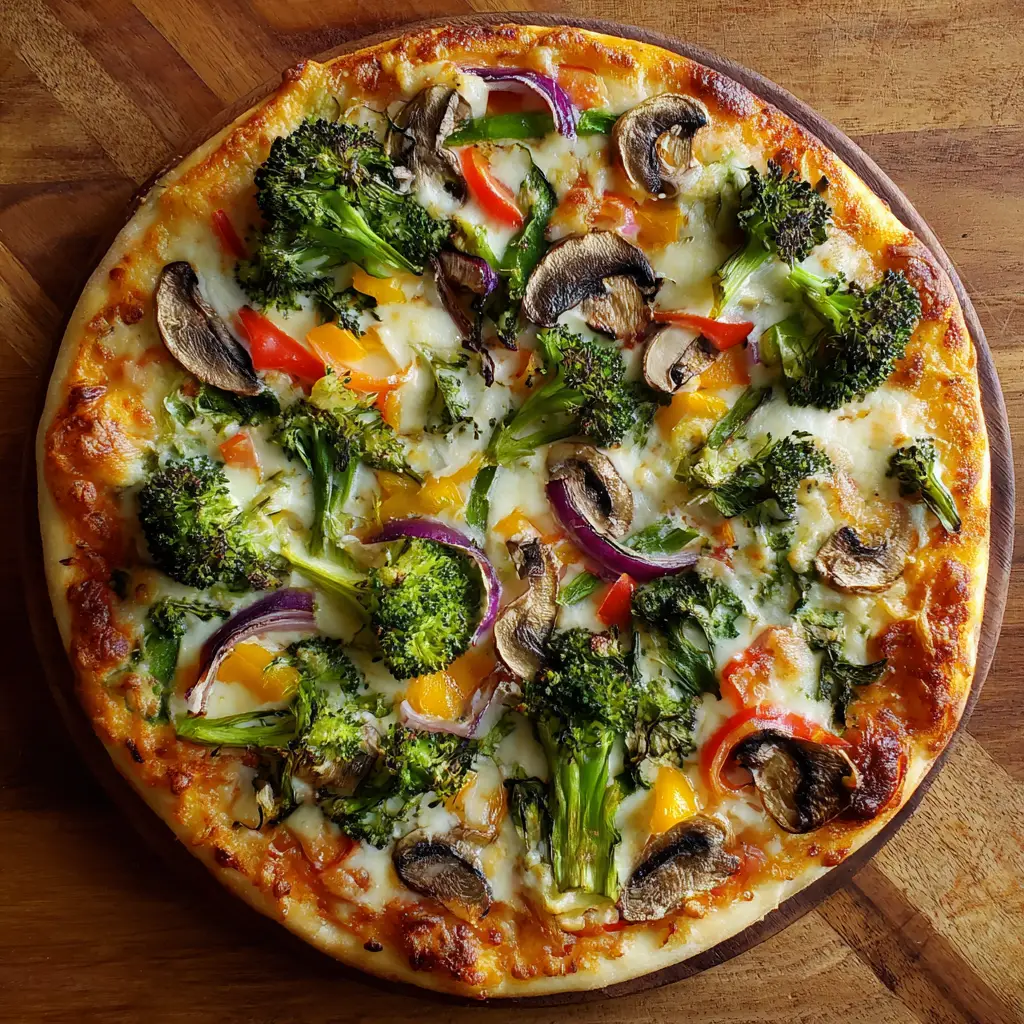
This veggie pizza offers a balance of macronutrients and contributes valuable vitamins, minerals, and fiber from the diverse vegetable toppings. You can reduce fat or calories by using low fat cheese, trimming the amount of oil, or using a thinner dough.
Serving Suggestions
Veggie pizza pairs beautifully with simple sides and beverages to complete the meal experience. Here are ideas:
- Green salad
A crisp side salad of mixed greens, cucumber, cherry tomato, red onion, and a light vinaigrette provides contrast and freshness. - Roasted or steamed vegetables
Serve seasonal vegetables such as asparagus, broccoli, or cauliflower to make the meal more filling. - Dipping sauces
Offer side dips like garlic yogurt, ranch dressing, marinara, or basil pesto to accompany the pizza. - Soups
A bowl of tomato soup, minestrone, or zucchini basil soup can balance the textures and add warmth. - Beverage pairing
Sparkling water with a twist of lemon, iced herbal tea, or a light red wine (for those who drink) complement the richness of the pizza. - Dessert
For a light finish, serve fresh fruit, sorbet, or a simple fruit salad. Keeping dessert simple ensures you do not overwhelm the palate after the pizza.

Veggie Pizza Recipe – Easy, Delicious, and Loaded with Fresh Vegetables
Course: Blog8
servings15
minutes15
minutes188
kcalIngredients
1 ball pizza dough (about 300 grams)
½ cup tomato pizza sauce (125 grams)
1 cup shredded mozzarella cheese (113 grams)
1 medium bell pepper (mixed colors), sliced (about 150 grams)
½ medium red onion, thinly sliced (about 75 grams)
1 small zucchini, sliced (about 100 grams)
100 grams mushrooms, sliced
1 cup cherry tomatoes, halved (about 150 grams)
¼ cup black olives, sliced (about 35 grams)
Directions
- Preheat the oven to 475°F (245°C). If available, place a pizza stone inside to heat.
- Roll or stretch the dough into a 12-inch round on a lightly floured surface.
- (Optional) Par bake the crust for 5 minutes to prevent sogginess. Remove from oven.
- Spread tomato sauce evenly over the crust, leaving a small border.
- Sprinkle shredded mozzarella cheese evenly over the sauce.
- Arrange spinach, bell peppers, red onions, zucchini, mushrooms, cherry tomatoes, and olives evenly on top.
Recipe Video
Notes
- Roasting vegetables before adding them can reduce moisture and add flavor.
Use low-fat cheese or less olive oil to reduce calories.
Customize toppings with your favorite seasonal vegetables or herbs.
Frequently Asked Questions
What makes a pizza “veggie”?
A pizza becomes a veggie pizza when its toppings are solely or mostly plant based—vegetables, greens, herbs, maybe plant proteins—and without meat. It emphasizes flavor from produce.
Can I make the dough ahead of time?
Yes. You can prepare the dough up to a day ahead and store it in the refrigerator, tightly wrapped. Bring it to room temperature before stretching. For longer storage, freeze the dough and thaw overnight in the refrigerator.
How do I avoid soggy crust with many vegetables?
Remove excess moisture by patting vegetables dry, roasting or sautéing them briefly before topping, and performing a brief par bake of the dough. Also avoid piling too many wet vegetables in one spot.
Is it better to pre bake the crust or go directly in?
Pre baking (par bake) helps create a barrier so moist toppings do not soak through. It is not strictly necessary but improves texture, especially in thicker crusts or with juicy toppings.
Can I make smaller individual pizzas?
Certainly. Use dinner roll sized dough or personal pizza dough. Adjust baking time downward (often 8 to 12 minutes) and monitor closely.
How do I reheat leftover pizza?
To preserve crispness, reheat in a skillet or oven (about 375 °F or 190 °C for 5 to 8 minutes). Avoid microwaving unless you place a paper towel underneath to absorb moisture.
Conclusion
A homemade veggie pizza can be a showstopper on your table. From the rustic charm of a hand stretched crust to the vibrant colors of peppers, spinach, tomatoes, mushrooms, and olives, it offers texture, flavor, and nutrition in every bite. Use the ingredients list and step by step instructions above to achieve a base version you can rely on. Then personalize it with herbs, sauce swaps, or seasonal produce to suit your taste. Each slice delivers vitamins, minerals, and plant based goodness, and the thoughtful serving ideas help you build a satisfying, balanced meal. Invite friends or family, share a warm pie, and enjoy how a simple vegetable pizza brings people together with delight.