Turkish Coffee: Authentic Recipe, Benefits, and Expert Brewing Tips
Introduction
Turkish coffee is not just a drink; it is a centuries-old tradition that captures the essence of culture, hospitality, and ritual. Unlike regular coffee, Turkish coffee offers a unique preparation method and a distinct flavor that sets it apart from any other brew. Originating from the Ottoman Empire, this coffee style has traveled through time and geography, becoming a symbol of social gatherings and intimate conversations. What makes Turkish coffee so special is its thick texture and intense aroma, achieved by finely ground coffee beans that are simmered slowly, rather than brewed or filtered. Its preparation is an art form, demanding patience, precision, and a deep appreciation for the rich sensory experience it provides. The ritual of making and serving Turkish coffee is an intimate affair that brings people together, often accompanied by sweet treats and lively conversation.
The method and tradition behind Turkish coffee have earned it a place on UNESCO’s Intangible Cultural Heritage list, highlighting its significance beyond just a beverage. Each cup tells a story, from the selection of the coffee beans to the final sip, often followed by reading the coffee grounds to predict the future, a practice known as tasseography. Understanding Turkish coffee means understanding the culture, the people, and the history embedded in every cup.

Ingredients Needed
Creating authentic Turkish coffee requires just a handful of simple ingredients, but the quality of each ingredient plays a crucial role in the final flavor and experience. Below is a detailed table outlining the necessary ingredients along with their calorie counts.
| Ingredient | Quantity | Calories per Serving |
|---|---|---|
| Finely ground coffee | 1 heaping teaspoon | 2 calories |
| Cold water | 1 demitasse cup (about 70 ml) | 0 calories |
| Sugar (optional) | 1 teaspoon (adjust to taste) | 16 calories |
| Cardamom (optional) | A pinch | 2 calories |
The coffee used in Turkish coffee should be ground to an extremely fine powder, almost like flour. Traditional Arabica beans are preferred for their smooth, rich flavor. The water must be cold to allow gradual extraction of flavor. Sugar is added depending on personal preference and can be omitted entirely. Cardamom is a common spice addition that enhances the aroma and offers a subtle exotic twist.
Step-by-Step Cooking Instructions
Mastering Turkish coffee involves patience and attention to detail. The process is simple but requires careful monitoring to achieve the perfect foam and avoid burning.
- Measure the Water: Pour one demitasse cup of cold water into the cezve, a small special pot designed for Turkish coffee.
- Add Coffee and Sugar: Add one heaping teaspoon of finely ground coffee to the cezve. If you prefer your coffee sweetened, add sugar now. Common levels of sweetness are no sugar (sade), little sugar (az şekerli), medium sugar (orta), or sweet (şekerli).
- Optional Cardamom: If you enjoy a hint of spice, add a pinch of cardamom at this stage for a fragrant aroma.
- Mix the Ingredients: Stir the mixture gently before heating, ensuring the coffee grounds and sugar dissolve in the cold water.
- Slow Heating: Place the cezve on low heat. Do not stir after placing it on the stove. As the coffee heats slowly, a thick foam will form on the surface.
- Watch for Foam Rise: When the foam rises to the top but before it boils, carefully remove the cezve from heat. This is the critical step to avoid boiling, which can ruin the flavor.
- Serve the Foam: Spoon some of the foam into each coffee cup. Return the cezve to the stove and allow the coffee to foam again but avoid boiling.
- Pour Carefully: Pour the remaining coffee slowly into the cups, distributing the foam evenly. Do not stir after pouring.
Turkish coffee is traditionally served with the grounds settled at the bottom of the cup, so take care not to disturb them when drinking.
Tips for Customizing the Recipe
Turkish coffee is versatile and can be tailored to suit individual tastes without compromising its authentic essence. Here are some ideas to customize your cup:
- Sweetness Levels: Adjust sugar quantity or substitute with natural sweeteners like honey or agave syrup to suit your preference.
- Spices: Beyond cardamom, experiment with a pinch of cinnamon, nutmeg, or cloves for a seasonal twist.
- Milk Alternative: While traditionally served black, some like to add a splash of warm milk or cream for a smoother texture, though this deviates from tradition.
- Coffee Strength: Increase or decrease the amount of coffee grounds based on how strong or mild you prefer your brew.
- Serving Style: Add crushed pistachios or serve with a side of Turkish delight, dried fruits, or nuts to complement the rich coffee flavor.
- Iced Variation: For warmer climates, allow the coffee to cool and pour it over ice for a refreshing adaptation.
- Use of Copper or Brass Cezve: The material of the cezve can impact heat distribution and flavor. Copper cezves are traditional and recommended for the best experience.

Nutritional Information
Despite its rich and bold flavor, Turkish coffee is surprisingly low in calories, especially when served without sugar. Here is a breakdown of the nutritional values for one serving of Turkish coffee:
- Calories: 2 calories (black, unsweetened)
- Fat: 0 grams
- Carbohydrates: 0 grams (without sugar)
- Protein: 0.1 grams
- Caffeine Content: Approximately 40 milligrams per demitasse cup
Adding sugar or spices will increase calorie count slightly but remains minimal overall. Turkish coffee contains antioxidants and polyphenols that contribute to health benefits such as improved heart health and reduced risk of certain diseases when consumed in moderation. It also offers a caffeine kick that is both smooth and sustained due to the slow brewing process.
Serving Suggestions
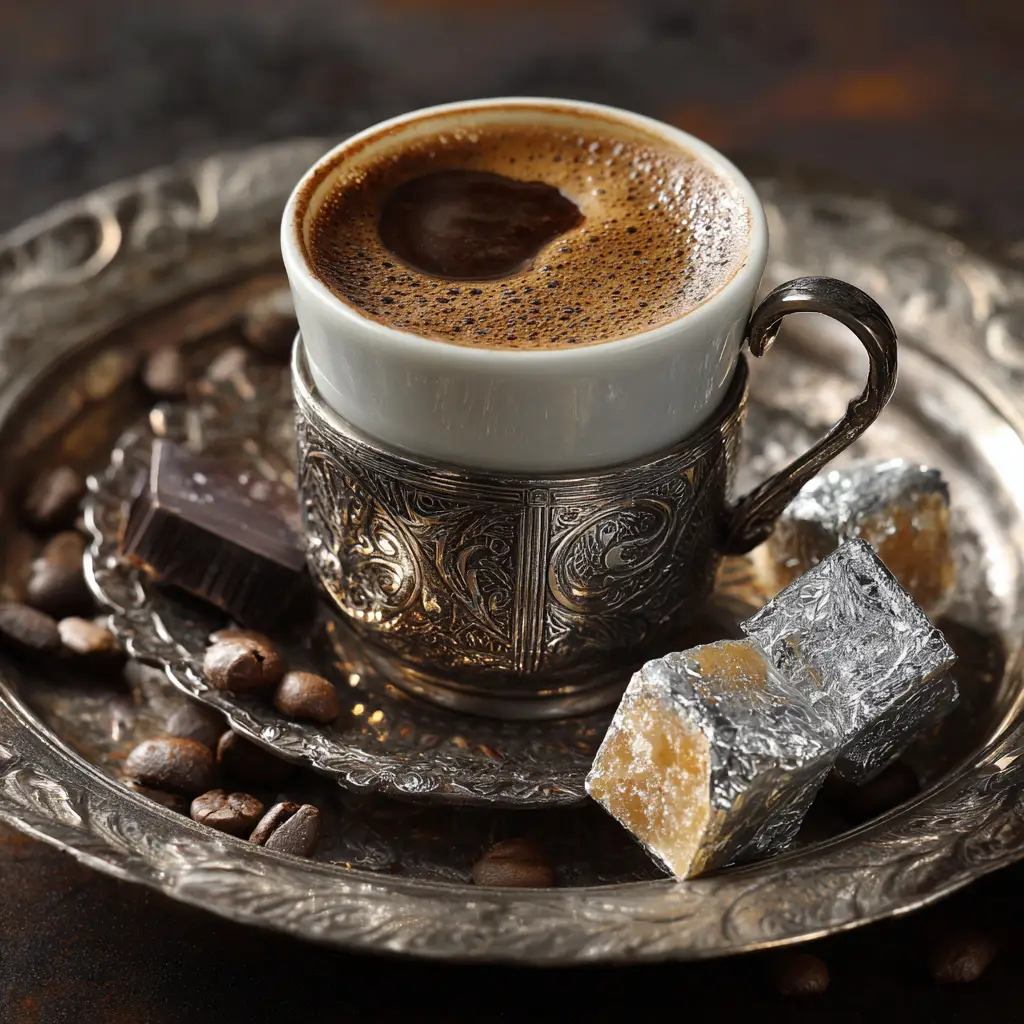
Presentation and atmosphere are key to the Turkish coffee experience. Traditionally, Turkish coffee is served in small, ornately decorated cups called fincan. These cups emphasize the ritualistic nature of coffee drinking and elevate the experience.
Serve your coffee with a small glass of cold water to cleanse the palate before sipping. Pair the coffee with sweet accompaniments such as:
- Turkish delight (lokum)
- Baklava or other nutty pastries
- Dates or dried figs
- Honey-coated nuts
The setting often includes soft lighting and comfortable seating, inviting slow conversation and relaxation. Turkish coffee is more than just a drink; it is an invitation to pause and savor life’s simple pleasures.

Turkish Coffee: Authentic Recipe, Benefits, and Expert Brewing Tips
Course: Blog1
servings3
minutes5
minutes18
kcalIngredients
1 heaping teaspoon finely ground Turkish coffee
1 demitasse cup (about 70 ml) cold water
1 teaspoon sugar (optional)
Pinch of cardamom (optional)
Directions
- Pour cold water into a cezve (Turkish coffee pot).
- Add finely ground coffee and sugar (if using). Stir gently to combine.
- Place cezve on low heat and slowly heat without stirring.
- When foam forms and starts to rise (before boiling), remove from heat.
- Spoon some foam into your coffee cup.
- Return cezve to heat and let foam rise again. Remove before boiling.
- Pour coffee carefully into the cup, distributing foam evenly.
- Let grounds settle before drinking.
Recipe Video
Notes
- For the best taste, use freshly ground Turkish coffee and cold water. Avoid boiling the coffee to preserve the rich aroma and smooth foam. Serve with a glass of cold water and a sweet treat like Turkish delight for an authentic experience.
Frequently Asked Questions
What is the difference between Turkish coffee and espresso?
Turkish coffee is brewed by simmering very finely ground coffee with water, while espresso is made by forcing hot water through finely ground coffee under pressure. Turkish coffee is thicker and unfiltered, whereas espresso is smooth and filtered.
Can I use a regular coffee maker to make Turkish coffee?
Traditional Turkish coffee requires a cezve for proper preparation. A regular coffee maker cannot replicate the slow simmering and foam formation essential to the authentic taste.
Is Turkish coffee stronger than regular coffee?
It can be stronger in flavor and intensity due to the fine grind and brewing method, but caffeine content is generally comparable to a similar volume of regular coffee.
Why is there coffee grounds at the bottom of the cup?
Turkish coffee is unfiltered, so grounds settle at the bottom. Drinking carefully without disturbing the grounds is part of the experience.
How should I store Turkish coffee grounds?
Store in an airtight container away from light and moisture to preserve freshness and flavor.
Conclusion
Turkish coffee is a timeless tradition that combines simplicity and sophistication in every cup. Its distinctive brewing method, rich taste, and cultural significance create an experience that is both personal and communal. Enjoying Turkish coffee is more than quenching your caffeine craving; it is about embracing history, hospitality, and moments of genuine connection.