Dutch baby pancake recipe easy oven baked breakfast favorite
The dutch baby pancake has earned a special place in home kitchens and brunch tables around the world.
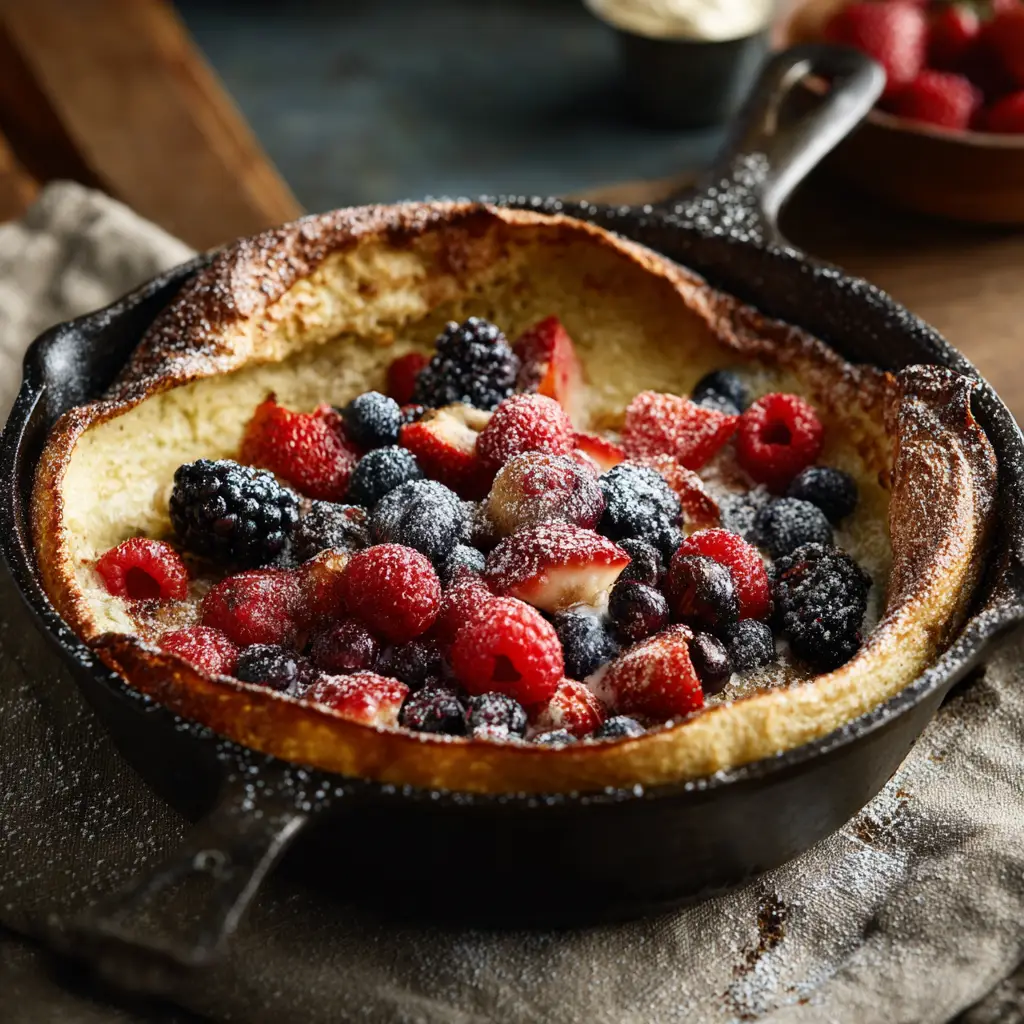
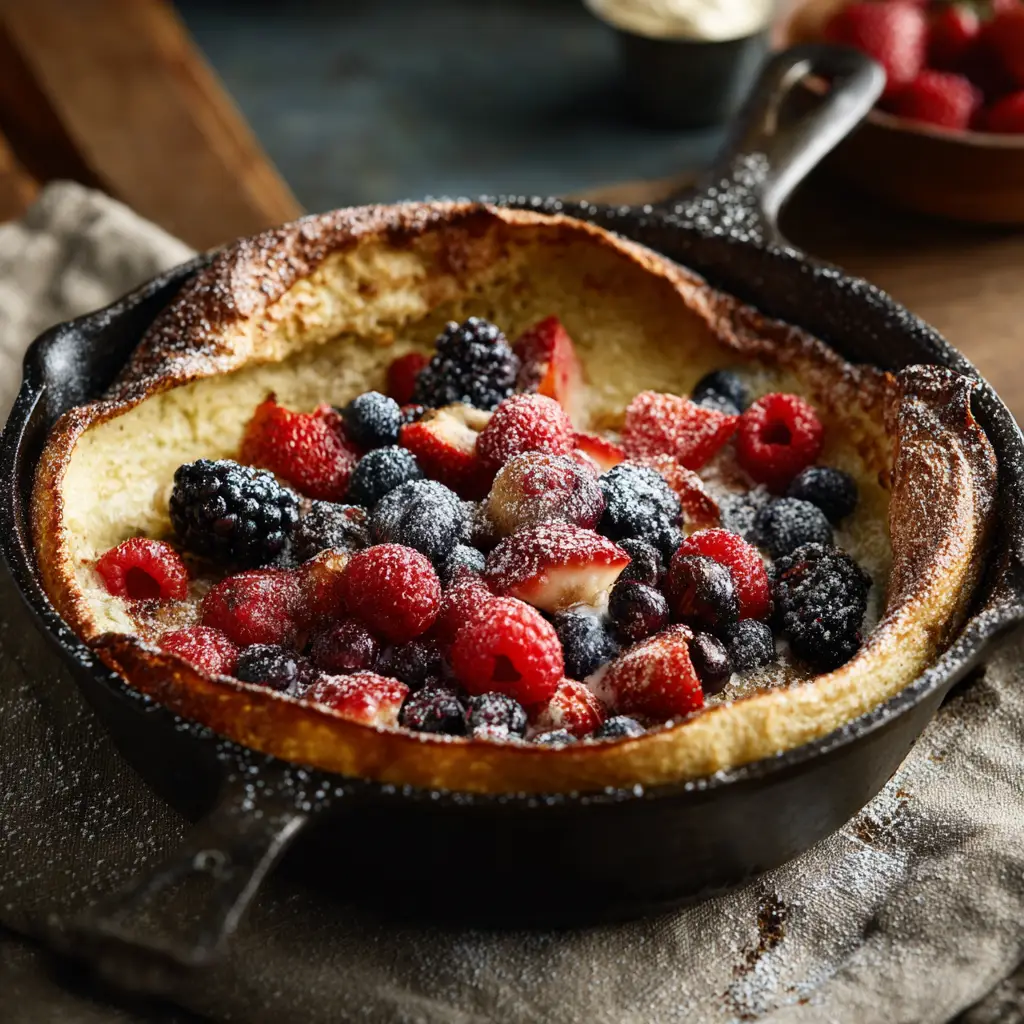
This dramatic oven baked pancake rises high along the edges, settles gently in the center, and delivers a texture that feels both custardy and crisp. Home cooks love it because it looks impressive yet requires very little effort. Food lovers admire it for its simple ingredient list and its ability to adapt to sweet or savory moods with ease.
Ingredients Needed
The ingredient list for a dutch baby pancake stays refreshingly short. Each item plays an important role in flavor and structure. Quality ingredients elevate the final result, though everyday pantry staples work perfectly well.
Ingredient Table with Estimated Calories Per Serving Portion
Ingredient | Quantity | Approximate Calories
Eggs | 3 large | 210
Whole milk | 1 half cup | 75
All purpose flour | 1 half cup | 220
Unsalted butter | 3 tablespoons | 300
Granulated sugar | 1 tablespoon | 50
Vanilla extract | 1 teaspoon | 12
Salt | 1 pinch | 0
Calorie counts vary based on brand and portion size. The table offers a helpful estimate for planning purposes.
Step by Step Cooking Instructions
Preparation sets the tone for success. Begin by preheating the oven to a hot temperature of four hundred twenty five degrees Fahrenheit. Place a cast iron skillet or heavy oven safe pan inside the oven during preheating. Heat creates the dramatic rise that defines the dutch baby pancake.
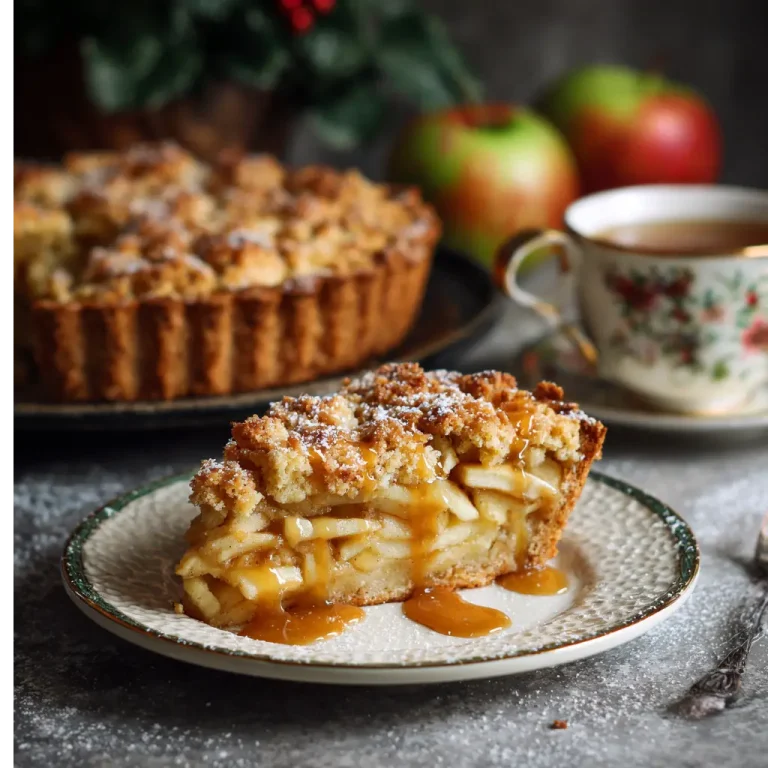
Crack the eggs into a mixing bowl. Whisk until the yolks and whites blend fully. Add the milk slowly while whisking to maintain a smooth texture. Sprinkle in the flour, sugar, vanilla extract, and salt. Whisk again until the batter looks silky and free of lumps. Resting the batter for a few minutes helps the flour hydrate and improves the final texture.If you enjoyed this, you might also love Dutch Apple Pie.
Carefully remove the hot skillet from the oven using thick oven mitts. Add the butter directly into the pan. Swirl gently as it melts, coating the bottom and sides. The butter should sizzle lightly but not burn. Pour the prepared batter into the center of the skillet. Return the pan to the oven immediately to preserve heat.
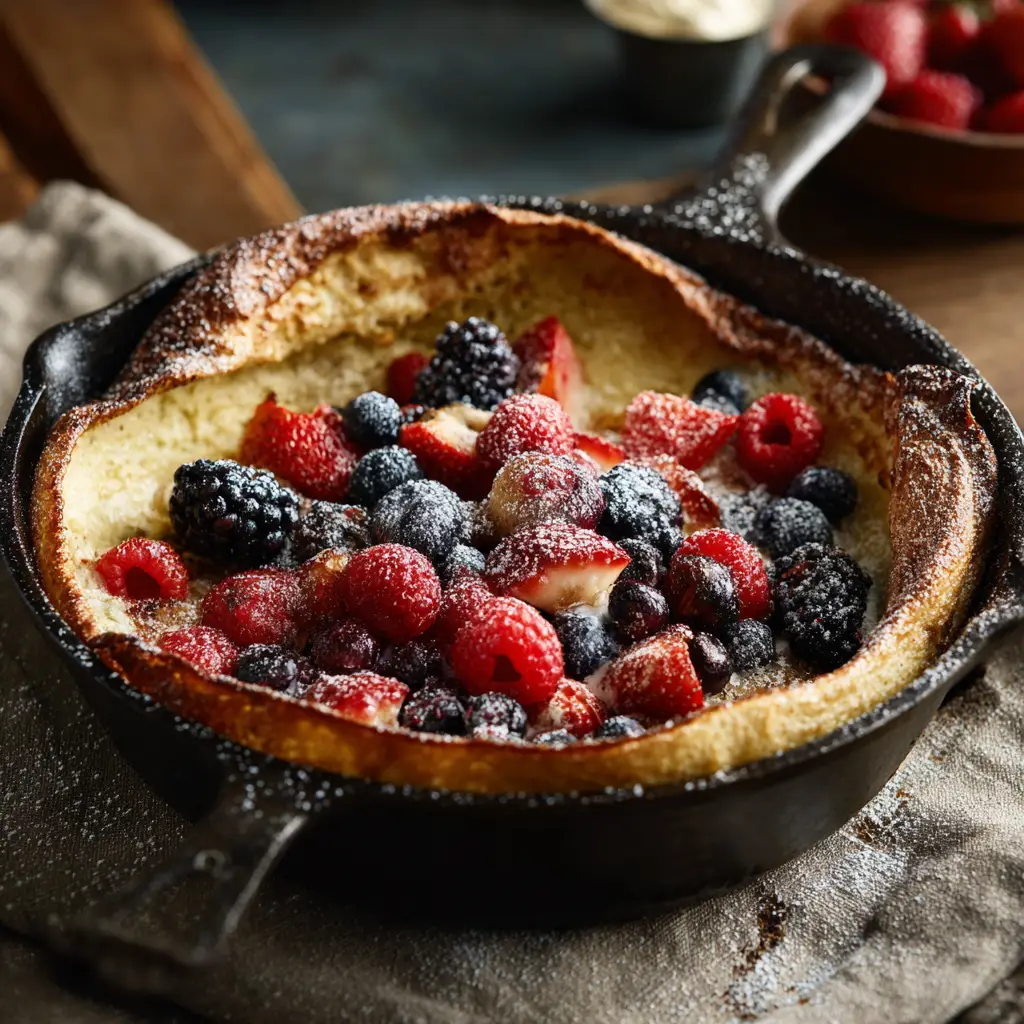
Bake for fifteen to twenty minutes without opening the oven door. The pancake will puff dramatically along the edges and turn golden brown. The center will remain slightly soft and custard like. Once baked, remove the skillet and place it on a heat resistant surface. The pancake will deflate slightly, creating a natural bowl for toppings.
Serve right away for the best texture and flavor. Timing matters. Fresh from the oven, the pancake offers crisp edges and a tender middle that feels indulgent yet light.
Tips for Customizing the Recipe
Customization transforms the dutch baby pancake into a versatile canvas. Sweet versions appeal to traditional breakfast lovers. Savory variations satisfy lunch or dinner cravings.
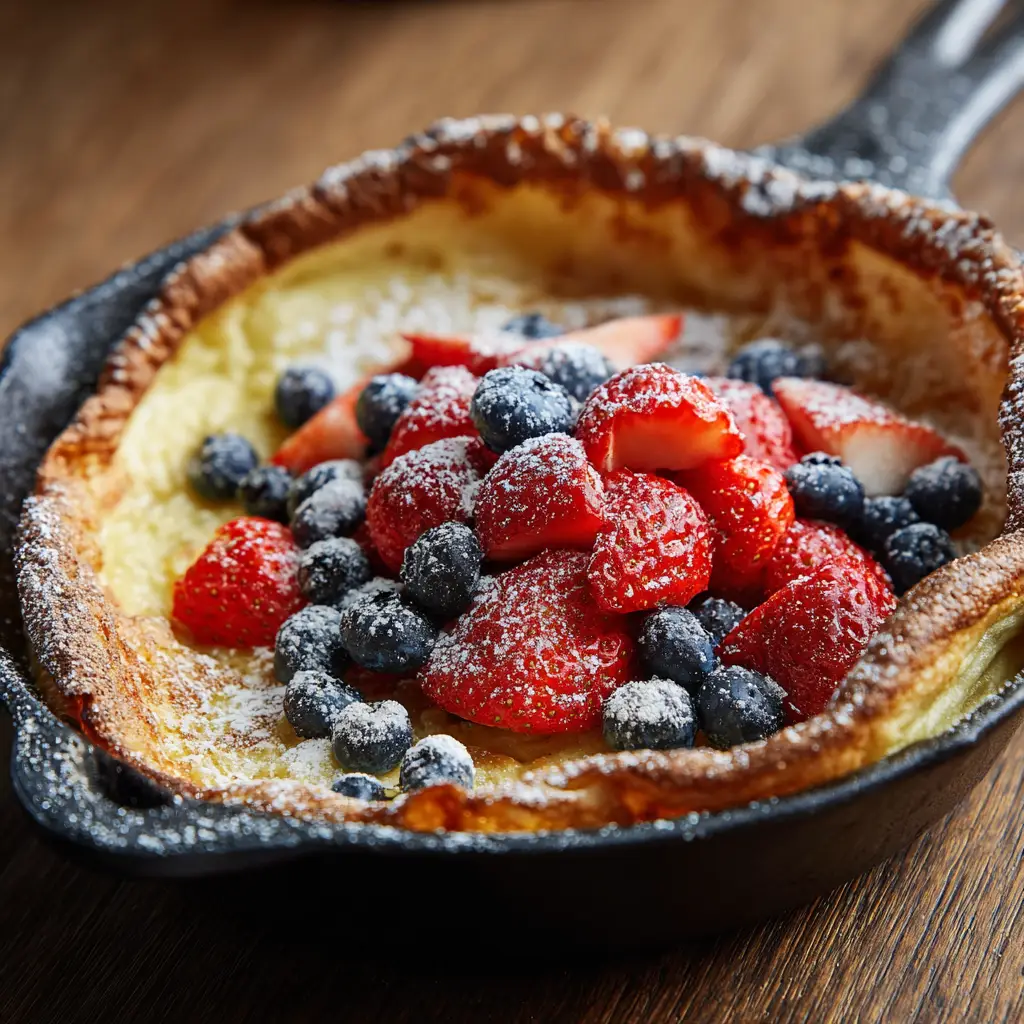
For a sweeter profile, add a touch more sugar to the batter. Cinnamon or nutmeg blended into the mix adds warmth. Fresh berries, sliced apples, or peaches pair beautifully once baked. A dusting of powdered sugar or a drizzle of maple syrup finishes the dish with classic comfort.
Savory options begin with reducing or omitting the sugar. Add grated cheese such as Gruyere or sharp cheddar directly into the batter. Fresh herbs like thyme or chives enhance aroma and flavor. After baking, top with smoked salmon, sautéed mushrooms, or roasted vegetables for a satisfying meal.
Texture adjustments also matter. Whole milk creates richness. Lower fat milk produces a lighter pancake. A splash of cream increases decadence. Gluten free flour blends can work well when measured carefully, though texture may differ slightly.
Pan choice influences results. Cast iron remains the gold standard for even heat and dramatic rise. Heavy stainless steel pans also perform well. Avoid nonstick pans that cannot tolerate high oven temperatures.
Serving size flexibility adds appeal. A single large pancake works well for sharing. Smaller individual pans create personal portions that feel special. Both approaches maintain the signature puff and flavor.
Nutritional Information
The dutch baby pancake offers a balance of protein, carbohydrates, and fats. Eggs contribute high quality protein and essential nutrients such as choline and vitamin D. Milk provides calcium and additional protein. Flour supplies energy through complex carbohydrates.
Butter adds richness and flavor while contributing fat soluble vitamins. Sugar remains minimal in traditional recipes, keeping sweetness subtle rather than overwhelming. Overall calorie content depends on toppings and portion size.
One standard serving delivers a satisfying meal without excessive heaviness. Pairing the pancake with fresh fruit increases fiber and vitamin content. Savory toppings like vegetables add minerals and antioxidants.
Mindful adjustments support different dietary needs. Reducing butter lowers fat content. Using plant based milk accommodates lactose intolerance. Portion control ensures enjoyment while supporting balanced nutrition.
Serving Suggestions
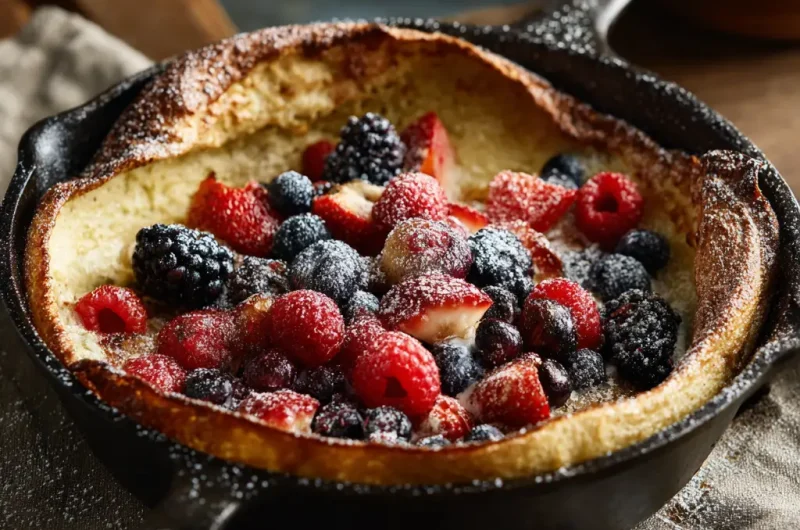
Presentation enhances enjoyment. Serve the dutch baby pancake directly from the skillet for rustic appeal. A light dusting of powdered sugar creates visual contrast against golden edges. Fresh fruit arranged in the center adds color and freshness.
For brunch gatherings, place toppings in small bowls and allow guests to customize their slices. Maple syrup, lemon wedges, whipped cream, and fruit compotes encourage creativity. Savory spreads benefit from side salads or lightly dressed greens.
Pair beverages thoughtfully. Coffee complements the rich flavor. Fresh juice adds brightness. Herbal tea balances sweetness. For special occasions, sparkling water or brunch cocktails elevate the experience.
Leftovers rarely occur, yet reheating remains possible. Warm slices gently in the oven to restore crispness. Avoid microwaving when possible, as it softens the edges.
Dutch baby pancake recipe easy oven baked breakfast favorite
Course: Blog2 to 3
servings10
minutes20
minutes430
kcalIngredients
3 large eggs
Half cup whole milk
Half cup all purpose flour
3 tablespoons unsalted butter
1 tablespoon granulated sugar
1 teaspoon vanilla extract
One small pinch of salt
Directions
- Preheat the oven to four hundred twenty five degrees Fahrenheit. Place a cast iron skillet or oven safe pan inside the oven while it heats.
- In a mixing bowl add the eggs. Whisk until smooth and fully combined. Pour in the milk and continue whisking. Add flour sugar vanilla extract and salt. Whisk again until the batter becomes smooth and slightly thin. Let the batter rest for a few minutes.
- Carefully remove the hot pan from the oven using oven mitts. Add the butter to the pan and swirl until fully melted and coating the surface.
Recipe Video
Notes
- Always preheat the pan to achieve the best rise and texture. Do not open the oven door while baking because this can cause the pancake to collapse early. Serve right away for crisp edges and a custardy center. This recipe works well for both sweet and savory toppings depending on personal preference.
Frequently Asked Questions
What makes a dutch baby pancake puff up so much
The dramatic rise comes from steam. High oven heat turns moisture in the batter into steam, which lifts the pancake as it bakes. A hot pan and well mixed batter support this process.
Can the batter be prepared in advance
Yes. Batter can rest in the refrigerator for several hours. Bring it close to room temperature before baking for best results. Cold batter may reduce puff slightly.
Why did my pancake not rise
Several factors influence rise. A pan that was not hot enough often causes flat results. Over mixing or under mixing the batter can also affect structure. Fresh eggs and proper oven temperature help ensure success.
Is a blender necessary for mixing
A blender creates a smooth batter quickly, though a whisk works well too. The key remains eliminating lumps and incorporating air evenly.
Can this recipe be made dairy free
Yes. Plant based milk and dairy free butter substitutes work well. Choose options with neutral flavor to maintain balance.
How long should the pancake cool before serving
Serve immediately for best texture. A brief one or two minute rest allows steam to settle while keeping edges crisp.
Conclusion
The dutch baby pancake brings joy to the table with minimal effort and maximum reward. Its dramatic rise, simple ingredients, and endless customization options make it a favorite for home cooks everywhere. Each bite delivers comfort and elegance in equal measure.