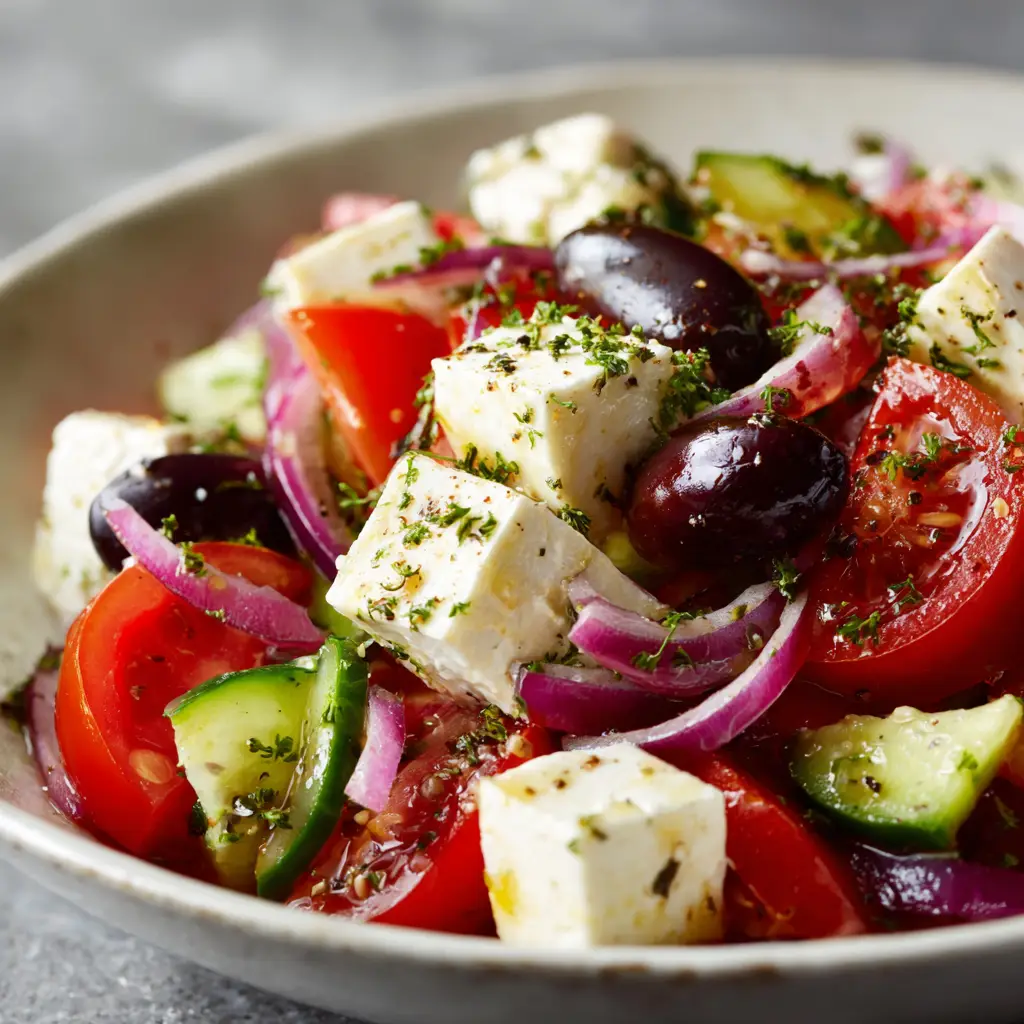
Greek Salad Recipe: Fresh, Healthy, and Delicious Mediterranean Salad
Greek salad captures the essence of Mediterranean cuisine in every bite. Vibrant, colorful, and packed with fresh ingredients, it delivers a perfect balance of flavors. Crisp cucumbers, juicy tomatoes, tangy olives, and creamy feta cheese come together in a dish that is both satisfying and healthy. Greek salad is more than just a side dish. It is a celebration of simple, fresh ingredients that highlight the natural flavors of each component. The combination of textures and tastes makes it a favorite for both casual meals and elegant dining.
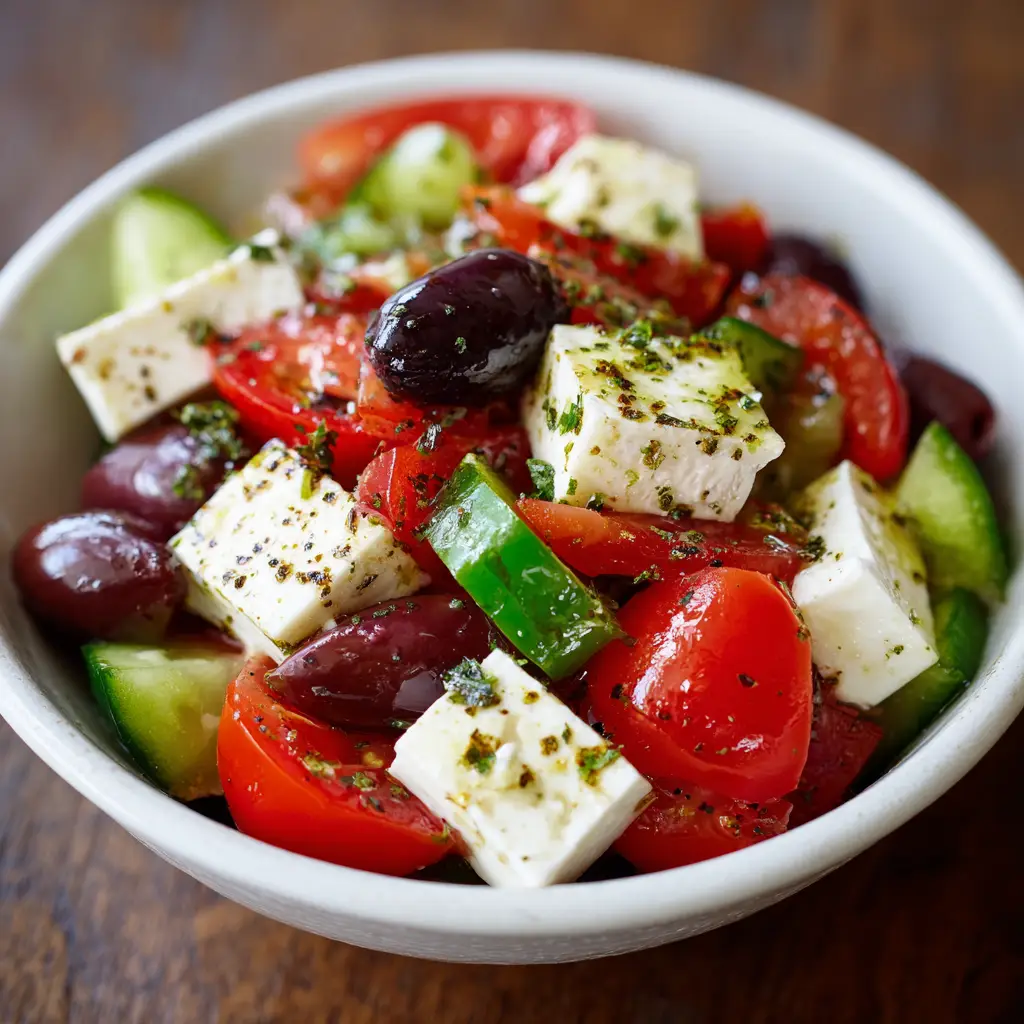
The origins of Greek salad trace back to ancient Greece when farmers and villagers would combine seasonal vegetables with local olive oil and herbs. Over time, the recipe evolved to include feta cheese and olives, creating the iconic salad enjoyed worldwide today. Its simplicity allows anyone to prepare it in minutes while still achieving a dish that tastes sophisticated. Greek salad is also highly versatile. It can be served as a side with grilled meats, as a light lunch, or even as a main course when paired with grains or protein. Beyond taste, it represents a lifestyle of healthy eating that emphasizes fresh, natural foods with minimal processing.
For those who prioritize both health and flavor, Greek salad is a perfect option. It is naturally low in calories and rich in vitamins, antioxidants, and healthy fats. The olive oil used in the dressing provides heart-healthy monounsaturated fats, while the vegetables supply fiber and essential nutrients. Eating Greek salad regularly can support overall well-being, enhance digestion, and contribute to a balanced diet. The bright colors and appealing textures also make it visually enticing, encouraging mindful eating and portion enjoyment.
Whether prepared at home or ordered at a Mediterranean restaurant, Greek salad has an inviting aroma and flavor profile. The mix of fresh herbs, ripe vegetables, and creamy cheese creates a dish that feels refreshing yet indulgent. It is simple enough for beginners to make and sophisticated enough to impress guests at a dinner party. Every bite carries a taste of the Greek islands, where fresh ingredients and traditional recipes have been cherished for generations.
Ingredients Needed
Preparing Greek salad requires only a few fresh ingredients, all of which are widely available in most grocery stores. Quality ingredients are key to achieving the authentic taste that makes this salad stand out. Below is a table with the essential ingredients and their approximate calorie counts per serving:
| Ingredient | Quantity | Calories (per serving) |
|---|---|---|
| Cucumbers | 1 large, sliced | 45 |
| Tomatoes | 2 medium, chopped | 44 |
| Red onion | 1 small, thinly sliced | 28 |
| Green bell pepper | 1 medium, chopped | 24 |
| Kalamata olives | 1/4 cup | 60 |
| Feta cheese | 1/2 cup, crumbled | 200 |
| Extra virgin olive oil | 2 tablespoons | 238 |
| Lemon juice | 1 tablespoon | 4 |
| Dried oregano | 1 teaspoon | 3 |
| Salt | To taste | 0 |
| Black pepper | To taste | 0 |
Selecting ripe tomatoes and fresh cucumbers is crucial. Opt for firm but juicy vegetables for the best flavor. Feta cheese can be bought in blocks for a creamier texture or pre-crumbled for convenience. Extra virgin olive oil makes a noticeable difference in taste, and freshly squeezed lemon juice brightens the salad naturally.
Step-by-Step Cooking Instructions
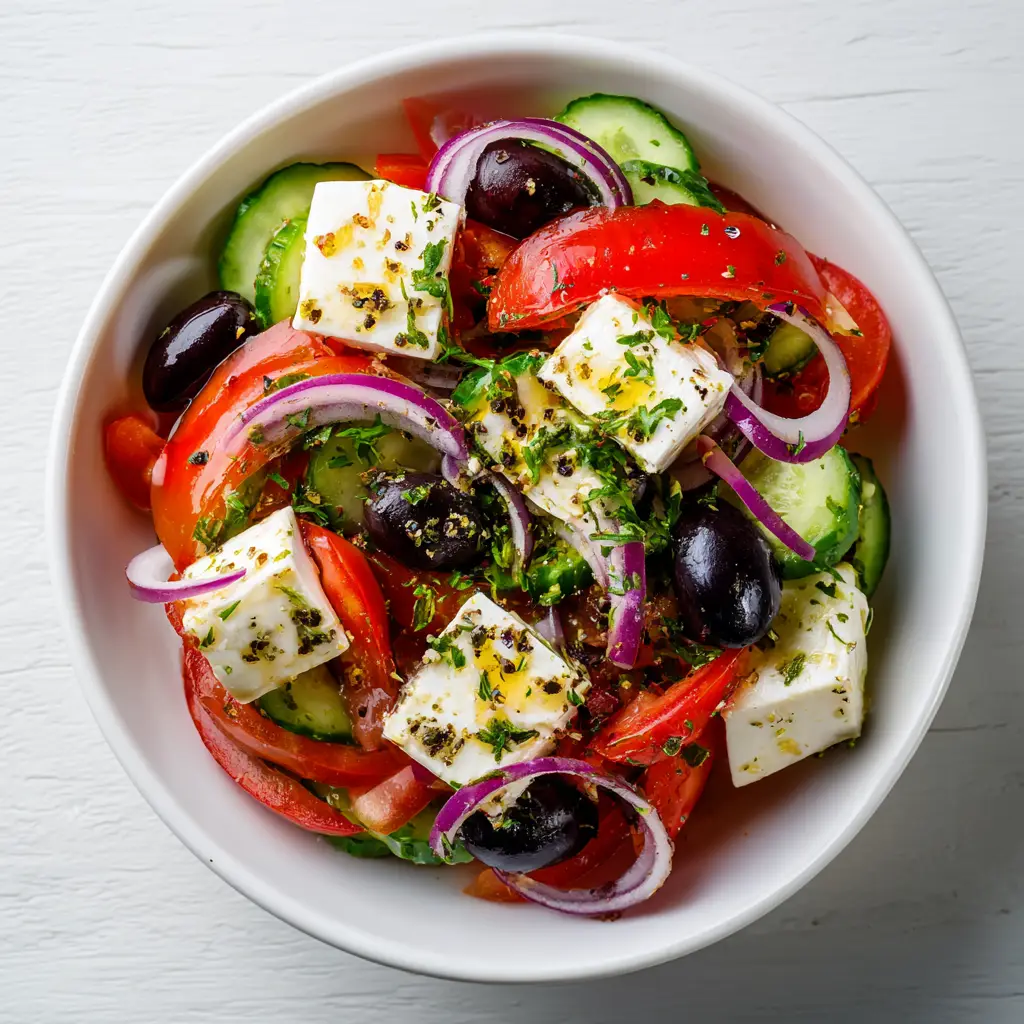
Creating Greek salad at home is straightforward. The key lies in proper preparation and layering flavors carefully.
- Begin by washing all vegetables thoroughly. Slice the cucumbers into thin half-moons and chop the tomatoes into bite-sized pieces. Remove the seeds from the bell pepper and cut it into small strips. Thinly slice the red onion to maintain a subtle crunch.
- Place all chopped vegetables in a large salad bowl. Toss them gently to combine without bruising the ingredients.
- Add Kalamata olives and crumbled feta cheese on top. The feta should sit on the salad rather than being mixed in immediately. This allows each bite to capture the creamy texture and tangy flavor.
- In a small bowl, combine extra virgin olive oil, lemon juice, dried oregano, salt, and black pepper. Whisk the dressing until fully blended.
- Pour the dressing evenly over the salad. Gently toss again to coat all vegetables and ingredients with the dressing. Be careful not to crush the feta or break the olives.
- Let the salad rest for five to ten minutes. This brief pause allows the flavors to meld, making each bite more vibrant and flavorful.
- Serve the Greek salad chilled or at room temperature. It pairs well with grilled chicken, fish, or pita bread.Looking for something similar? Check out High Protein Chicken Salad.
Following these steps ensures a fresh, balanced salad every time. Paying attention to ingredient quality and handling the vegetables gently preserves the textures and flavors that define this classic dish.
Tips for Customizing the Recipe
Greek salad can be adapted to personal taste without losing its traditional appeal. Adding fresh herbs such as parsley or mint can elevate the flavor and aroma. Some people enjoy a splash of red wine vinegar instead of lemon juice to create a slightly tangier dressing.
Protein can be added to transform Greek salad into a complete meal. Grilled chicken, shrimp, or chickpeas work particularly well. For a richer flavor, consider roasting the bell peppers before adding them to the salad. Roasted peppers bring a subtle sweetness and depth to the dish.
Experimenting with cheese varieties is another option. While feta is traditional, using goat cheese or halloumi can create a different flavor profile. Similarly, changing the type of olives, such as using green olives or a mix, provides variety while maintaining the Mediterranean essence.
For a heartier version, consider adding cooked quinoa or couscous. These grains add bulk and make the salad more filling while keeping it nutritious. Toasted nuts like almonds or pine nuts can also enhance texture and add a subtle crunch.
Nutritional Information
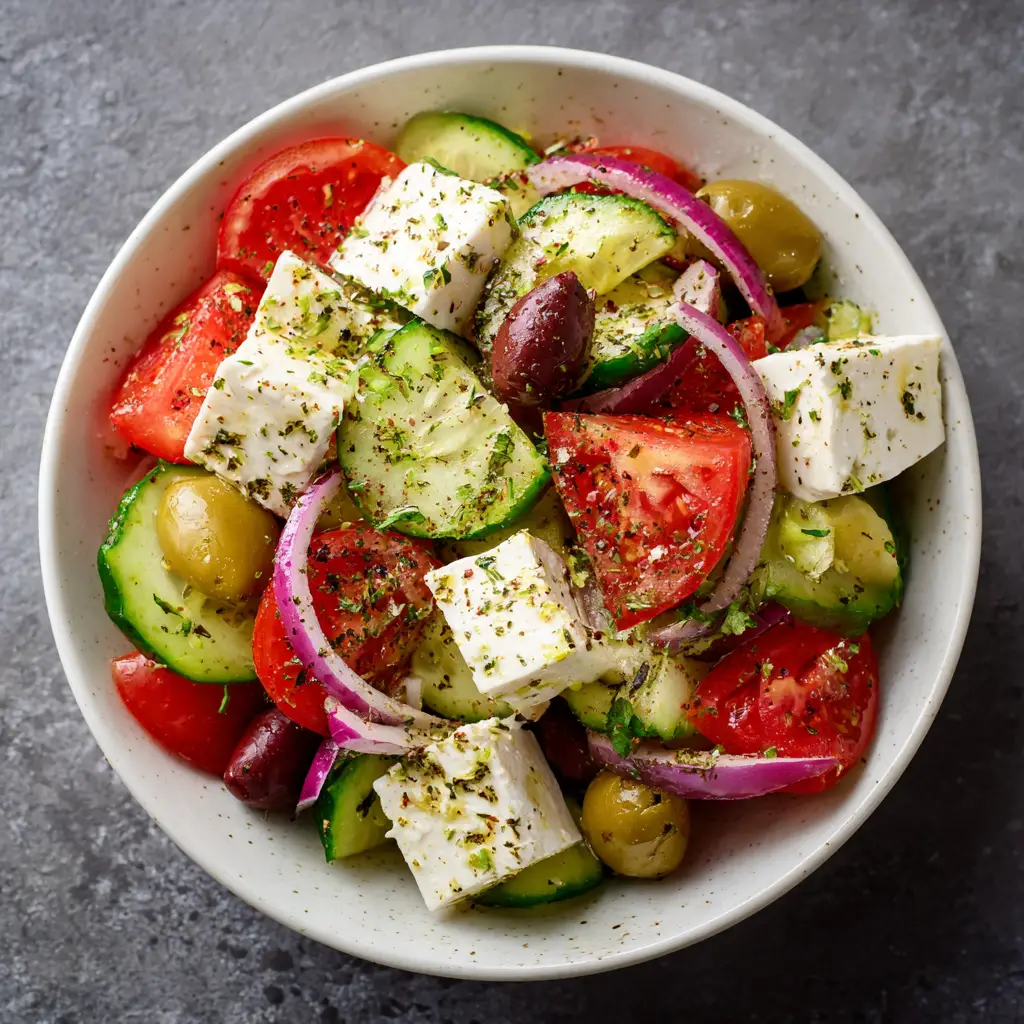
Greek salad is celebrated for its health benefits. It is naturally low in calories while rich in nutrients essential for overall well-being. Each serving provides fiber from vegetables, protein from cheese, and healthy fats from olive oil.
The vegetables contribute vitamins A, C, and K along with minerals like potassium and magnesium. Feta cheese offers calcium and protein, which support bone health. Olive oil provides monounsaturated fats, which help maintain healthy cholesterol levels and promote heart health.
Including Greek salad in a balanced diet can support weight management, improve digestion, and increase antioxidant intake. Its combination of fresh ingredients provides sustained energy without heavy calories, making it an ideal choice for light lunches or side dishes at dinner.
Serving Suggestions
Greek salad pairs wonderfully with a variety of dishes. It complements grilled meats like chicken, lamb, or fish. Serving it alongside fresh pita bread or whole grain crackers makes a simple yet satisfying meal.
For a Mediterranean-themed dinner, consider pairing Greek salad with roasted vegetables, hummus, or tzatziki. It also works well as part of a larger mezze platter, offering a refreshing contrast to rich dips and fried items.
For a light lunch, serve Greek salad with a boiled egg or grilled tofu. Adding a protein source transforms it into a filling meal without sacrificing the fresh, crisp flavors. Presentation matters as well. Arrange the ingredients in a colorful, visually appealing manner to enhance the dining experience and make the salad feel more inviting.
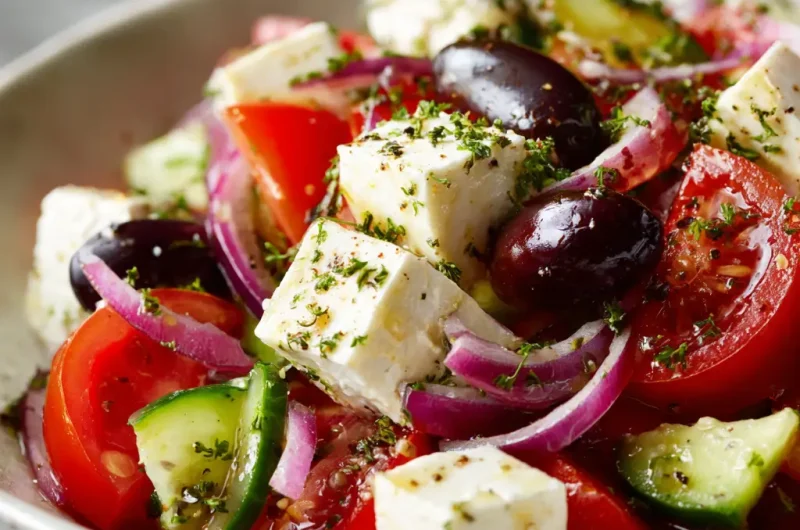
Greek Salad Recipe: Fresh, Healthy, and Delicious Mediterranean Salad
Course: Salad recipes2-3
servings5
minutes12
minutes80
kcalIngredients
2 medium yellow squash, sliced into 1/4-inch rounds
1 tablespoon olive oil
1/2 teaspoon garlic powder
1/2 teaspoon paprika
Salt to taste
Black pepper to taste
Fresh parsley for garnish (optional)
Directions
- medium yellow squash, sliced into 1/4-inch rounds
- tablespoon olive oil
- /2 teaspoon garlic powder
- /2 teaspoon paprika
- Salt to taste
- Black pepper to taste
- Fresh parsley for garnish (optional)
Recipe Video
Notes
- For extra crispiness, spray a light layer of oil on the squash before air frying.
Cooking time may vary depending on the thickness of the squash slices.
Avoid stacking too many slices; cook in batches if needed.
Frequently Asked Questions
What is the difference between Greek salad and a garden salad?
Greek salad typically includes tomatoes, cucumbers, bell peppers, red onions, olives, and feta cheese with a simple olive oil and lemon dressing. Garden salads may have a wider variety of vegetables and often include lettuce as a base.
Can Greek salad be stored for later?
Greek salad is best served fresh. However, it can be stored in an airtight container in the refrigerator for up to one day. Avoid adding dressing until just before serving to prevent the vegetables from becoming soggy.
Is Greek salad suitable for vegetarians or vegans?
Greek salad is naturally vegetarian. To make it vegan, simply omit the feta cheese or replace it with a plant-based alternative.
Can I use bottled lemon juice instead of fresh lemon?
Fresh lemon juice is recommended for the best flavor. Bottled lemon juice can be used in a pinch but may slightly alter the taste of the dressing.
Can I add other vegetables to Greek salad?
Yes, ingredients like zucchini, radishes, or carrots can be added. Traditional Greek salad remains simple, but additions can provide extra nutrition and variety.
Conclusion
Greek salad is a timeless dish that blends freshness, flavor, and nutrition effortlessly. Each ingredient plays a crucial role, from the crisp vegetables to the creamy feta and briny olives. Preparing Greek salad at home is simple, yet the result is elegant and satisfying. Its versatility allows for endless customization while maintaining its Mediterranean roots.
The salad is more than just a meal; it is an invitation to enjoy wholesome ingredients in their natural form. Whether served as a side dish, a light lunch, or a centerpiece for a Mediterranean feast, Greek salad consistently delivers on taste and health benefits. Taking the time to select fresh ingredients and prepare the salad thoughtfully makes a noticeable difference in flavor.
Incorporating Greek salad into your routine brings not only a burst of color and taste but also the essence of Mediterranean wellness. Every bite celebrates freshness, balance, and simplicity, making it a dish that appeals to all senses and encourages mindful, joyful eating.